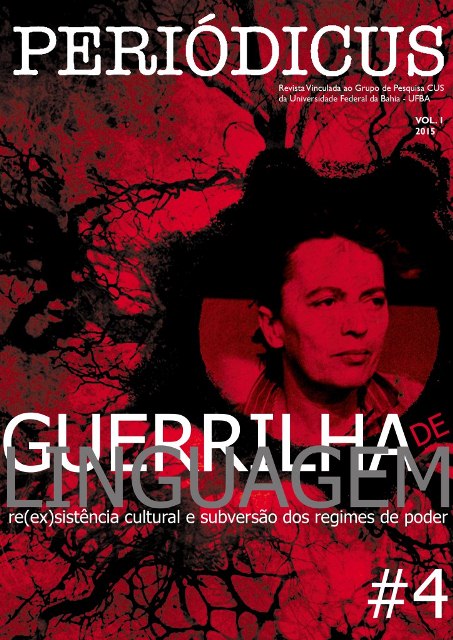
Uma crítica para enfrentar os poderes que nos querem aprisionar
DOI:
https://doi.org/10.9771/peri.v1i4.15418Abstract
Em um tempo em que as inúmeras guerras travadas pelo mundo afora matam mais do que nunca; em que, como aponta Butler, a morte mais se assemelha a um programa televisivo, coordenada por controle remoto; em que os diversos fundamentalismos, dentre eles, e o pior, o religioso, (des)fazem fronteiras territoriais, incendeiam templos de religiões de matriz afrobrasileira e perigosamente têm por refém o Congresso Nacional Brasileiro, é pertinente, e profundamente imperativo, que reflitamos sobre e (re)elaboremos estratégias políticas capazes de enfrentar esses inimigos da vida vivível, tornando possível, conforme mais uma vez afirma Butler, que “os corpos se movam livremente dentro de uma democracia”. E para que os corpos se movam livremente, para que eles ocupem os espaços e possam (re)existir, a branquitude, a heteronormatividade, os fundamentalismos, o capacitismo, e por que não dizer o capitalismo, tomados aqui como regimes políticos e epistemológicos de governação da vida, devem ser destituídos por meio da ação crítica.
Downloads
Downloads
Published
How to Cite
Issue
Section
License

This work is licensed under a Creative Commons Attribution-NonCommercial 4.0 International License.
Authors who publish in this journal agree to the following terms:
Authors retain copyright and grant the journal the right of first publication, with the work simultaneously licensed under a Creative Commons Attribution Noncommercial License that allows the work to be shared with acknowledgment of authorship and initial publication in this journal, but prohibits commercial use.
Authors are authorized to enter into separate additional contracts for non-exclusive distribution of the version of the work published in this journal (e.g., publishing in an institutional repository or as a book chapter), with acknowledgment of authorship and initial publication in this journal.
Authors are permitted and encouraged to publish and distribute their work online (e.g., in institutional repositories or on their personal website) at any point before or during the editorial process, as this can generate productive changes and increase the impact and citation of the published work (see The Effect of Open Access).