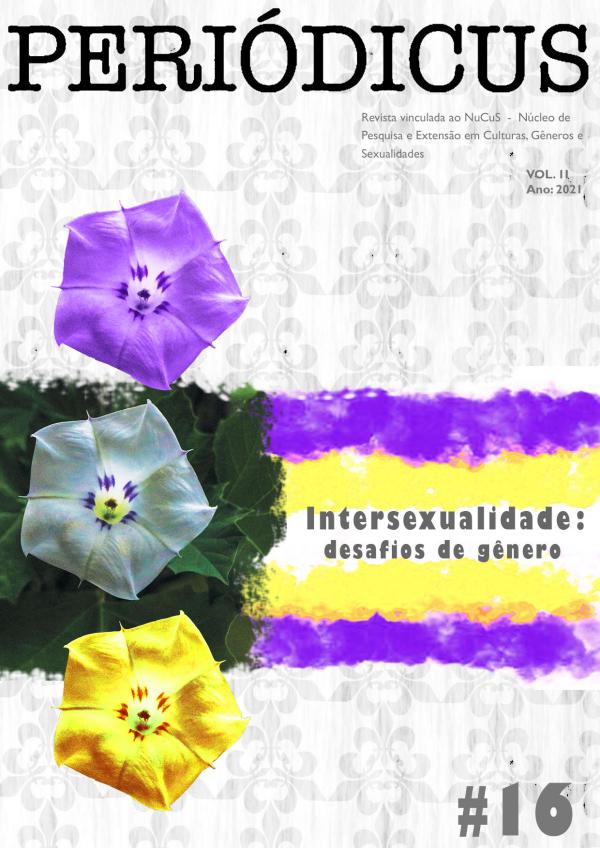
Heteronormativity and dominant ideology: the refusal of the song “Parabéns” by singer Pablo Vittar
DOI:
https://doi.org/10.9771/peri.v2i16.37082Abstract
Based on the French Discourse Analysis proposed by Michel Pêcheux, this article reflects on the ideological
determination that influences the social imaginary about gender identity from a conversation between a radio host and the
listeners. The corpus consists of two screenshots of WhatsApp messages taken from Twitter. In the conversations, Rádio
Super FM 89.1 refuses to play the song “Parabéns” by singer Pabllo Vittar, on the grounds that he does not know drag
queen’s gender identity. We know that ideology materializes itself in language; therefore, the meanings assigned are not
characteristic of language, but of how subjects relate to ideology, that is, the process of meaning production varies
according to the subject’s identification with a particular discursive formation. We understand that, with the analysis, there
is resistance to the knowledge that causes oppression and reproduces different types of violence in our social formation.
Downloads
Downloads
Published
How to Cite
Issue
Section
License
Copyright (c) 2021 Camila Franz Marquez, Luciana Iost Vinhas

This work is licensed under a Creative Commons Attribution-NonCommercial 4.0 International License.
Authors who publish in this journal agree to the following terms:
Authors retain copyright and grant the journal the right of first publication, with the work simultaneously licensed under a Creative Commons Attribution Noncommercial License that allows the work to be shared with acknowledgment of authorship and initial publication in this journal, but prohibits commercial use.
Authors are authorized to enter into separate additional contracts for non-exclusive distribution of the version of the work published in this journal (e.g., publishing in an institutional repository or as a book chapter), with acknowledgment of authorship and initial publication in this journal.
Authors are permitted and encouraged to publish and distribute their work online (e.g., in institutional repositories or on their personal website) at any point before or during the editorial process, as this can generate productive changes and increase the impact and citation of the published work (see The Effect of Open Access).