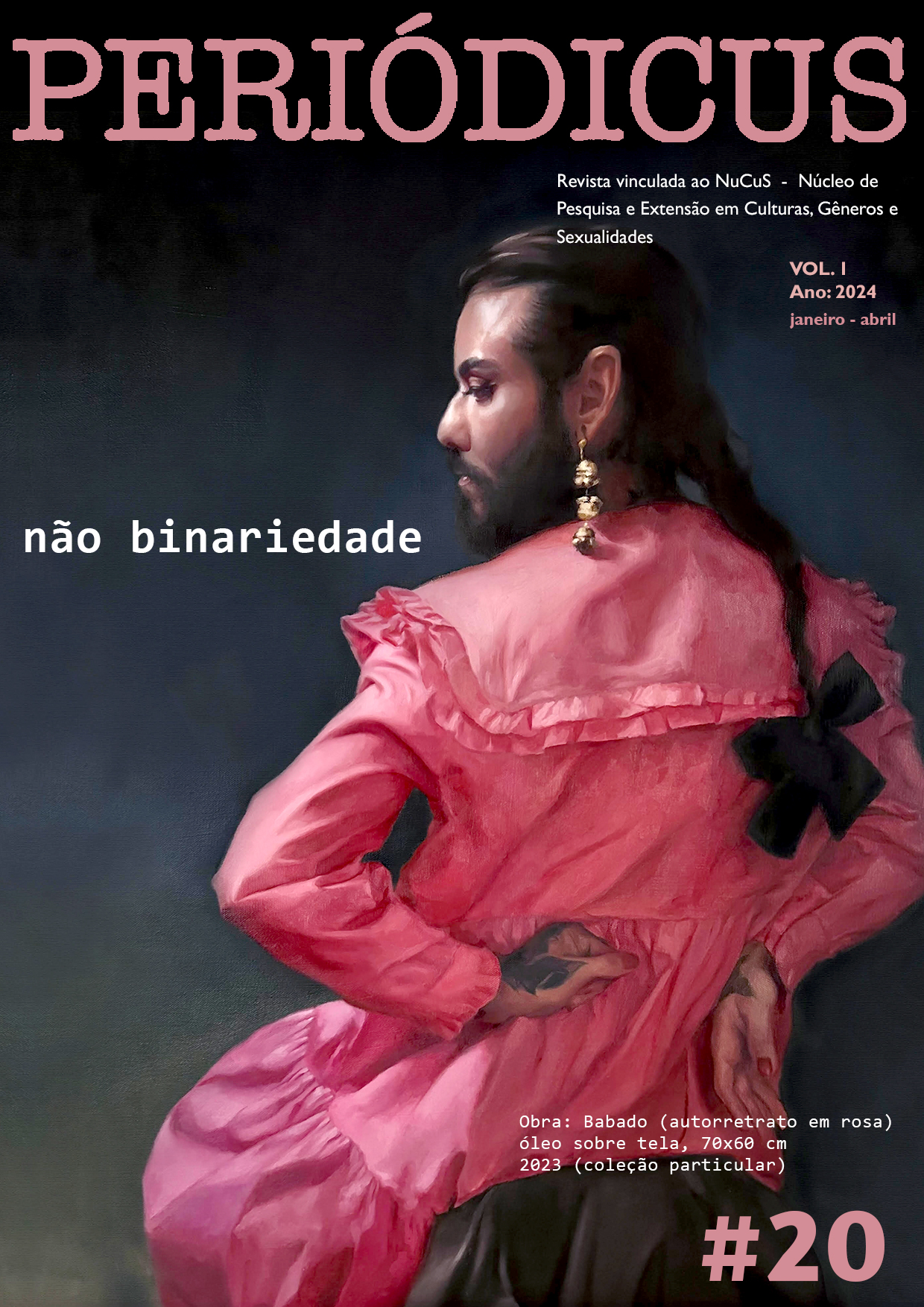
Identidades não binárias
a escuta psicanalítica como meio para a subversão do binarismo
DOI:
https://doi.org/10.9771/peri.v1i20.52909Resumo
Entende-se por binarismo a forma dicotômica de perceber a realidade, que se mostra cada vez mais inflexível, auxiliando no surgimento dos binarismos que constituem as estruturas sociais. Diante disso, este estudo pretende abordar as concepções binárias de gênero que permeiam a atual sociedade brasileira. Além de pessoas cisgêneras, existem também as pessoas de identidades de gênero dissidentes e, dentro desse grupo, as pessoas não binárias. Gradualmente essa comunidade tem conquistado espaços, pautando que há possibilidades de identificação além da dicotomia mulher/homem e seus respectivos papéis de gênero. Esta pesquisa almeja compreender como a escuta psicanalítica pode ser uma ferramenta para o fortalecimento de pessoas não binárias diante de um mundo imerso na cisnormatividade e no binarismo, de modo a colaborar para a subversão. Assim, a psicanálise não pode se abster dos diálogos que emergem no meio social e político, bem como as outras vertentes da psicologia. É necessário que esteja sensível diante das formas não cisgêneras de vivenciar as identidades de gênero. Com isso, foi realizada uma revisão narrativa da literatura com os bancos de dados da SciELO e dos Repositórios Institucionais da UFJF, UFBA e UFRGS; além de livros e outras referências, como materiais audiovisuais exibidos no YouTube. Por fim, é esperado que sejam favorecidas reflexões sobre a escuta ética na psicanálise e sobre a naturalização da cisgeneridade. A população não binária ainda é excluída dos espaços, além de ainda ser patologizada no campo da saúde. Apesar disso, é possível exercer uma escuta que não violente essas existências.
Downloads
Downloads
Publicado
Como Citar
Edição
Seção
Licença
Copyright (c) 2024 Mariana de Castro Midlej, Anderson Fontes Passos Guimarães

Este trabalho está licenciado sob uma licença Creative Commons Attribution-NonCommercial 4.0 International License.
Autores que publicam nesta revista concordam com os seguintes termos:
Autores mantêm os direitos autorais e concedem à revista o direito de primeira publicação, com o trabalho simultaneamente licenciado sob Licença Creative Commons Attribution Noncommercial que permite o compartilhamento do trabalho com reconhecimento da autoria e publicação inicial nesta revista, sendo vedado o uso com fins comerciais.
Autores têm autorização para assumir contratos adicionais separadamente, para distribuição não-exclusiva da versão do trabalho publicada nesta revista (ex.: publicar em repositório institucional ou como capítulo de livro), com reconhecimento de autoria e publicação inicial nesta revista.
Autores têm permissão e são estimulados a publicar e distribuir seu trabalho online (ex.: em repositórios institucionais ou na sua página pessoal) a qualquer ponto antes ou durante o processo editorial, já que isso pode gerar alterações produtivas, bem como aumentar o impacto e a citação do trabalho publicado (Veja O Efeito do Acesso Livre).