"Mona, I don't have to teach you"
reflections on non-binarity of gender, interpellation and psi practice
DOI:
https://doi.org/10.9771/peri.v1i20.54808Abstract
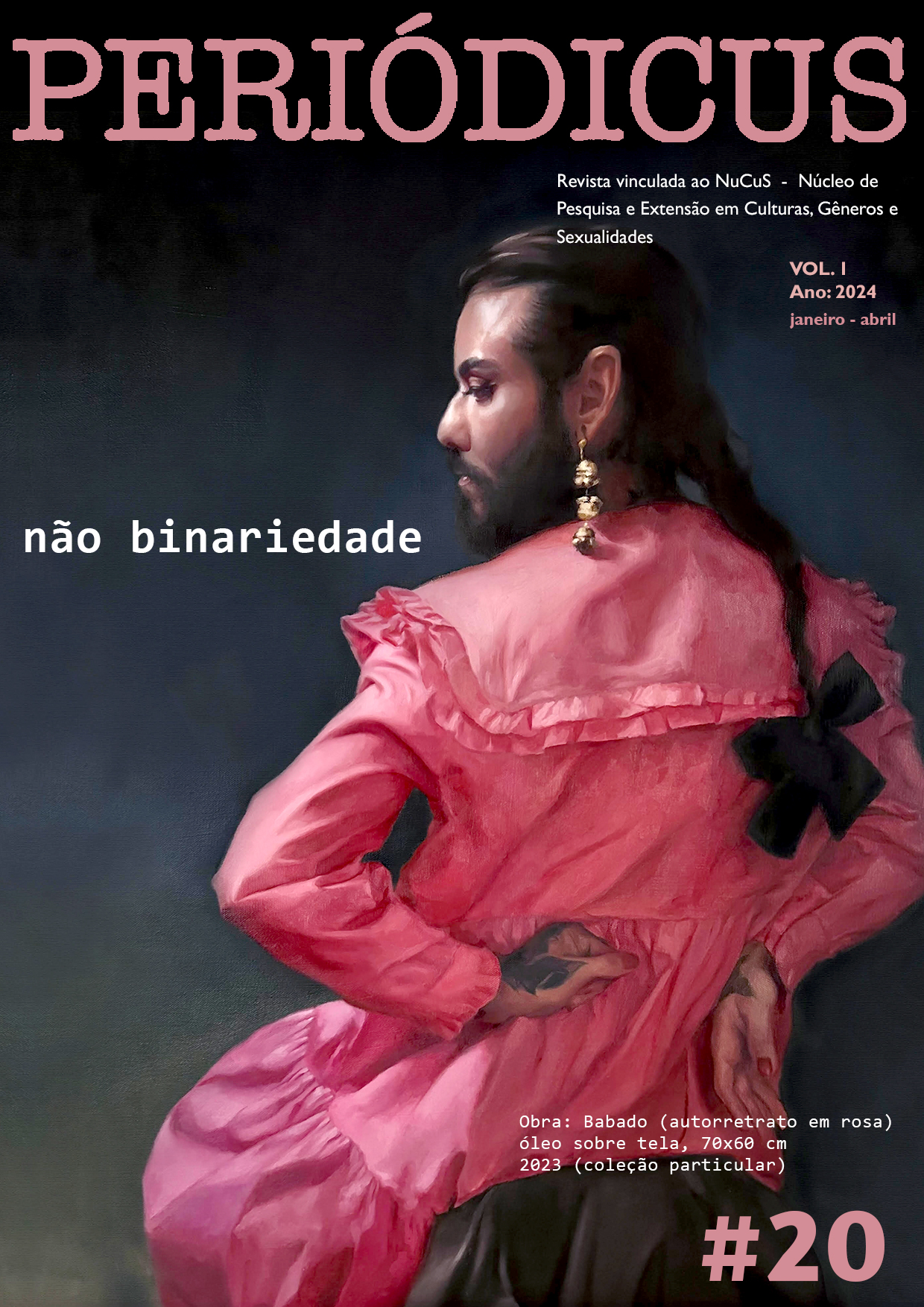
Despite the recent changes and social and political advances that non-binary people have been conquering in recent years, adopting this gender identity in Brazil still means facing major challenges, so present in trans populations: the lack of social recognition (including within the community LGBTQIAP+), the invisibilization of specific demands in health care (physical, mental and social), the different forms of transphobia and social and affective isolation. In the first part of this article, based on the report of my experience in the master's degree in Social Psychology at the State University of Rio de Janeiro, we will discuss the importance of qualified and up-to-date training in gender and sexuality issues in undergraduate and graduate courses in psychology. In the second part, based on the narrative of Mab's story (a non-binary person who participated in the field phase of the research), we will observe the dilemmas of fluidity and social interpellations in the construction of a non-binary identity.
Downloads
Downloads
Published
How to Cite
Issue
Section
License
Copyright (c) 2024 Ana Carolina Padilha da silva

This work is licensed under a Creative Commons Attribution-NonCommercial 4.0 International License.
Authors who publish in this journal agree to the following terms:
Authors retain copyright and grant the journal the right of first publication, with the work simultaneously licensed under a Creative Commons Attribution Noncommercial License that allows the work to be shared with acknowledgment of authorship and initial publication in this journal, but prohibits commercial use.
Authors are authorized to enter into separate additional contracts for non-exclusive distribution of the version of the work published in this journal (e.g., publishing in an institutional repository or as a book chapter), with acknowledgment of authorship and initial publication in this journal.
Authors are permitted and encouraged to publish and distribute their work online (e.g., in institutional repositories or on their personal website) at any point before or during the editorial process, as this can generate productive changes and increase the impact and citation of the published work (see The Effect of Open Access).